

The Best Breathable Summer Robe for Hot Weather Lounging
The best breathable summer robe for most people is a lightweight linen or cotton-linen kimono, worn short or mid-length with loose sleeves. Editorial robe testing from Wirecutter consistently ranks linen among the lightest, coolest fabrics tested, and Indijio’s small-batch linen and cotton-linen kimonos are built on that same fiber logic.
- Linen and cotton-linen blends breathe better and dry faster than thicker terry or polyester robes.
- Indijio sources natural fibers through artisan partners in Türkiye, so the weave stays loose and the fabric stays honest about what it’s made of.
Key Takeaways
A breathable summer robe works best when it combines a loose natural-fiber weave, like linen or cotton-linen, with a lightweight cut suited to how you’ll actually wear it.
| Point | Details |
|---|---|
| Fabric comes first | Linen and cotton-linen blends breathe and dry faster than terry or synthetic blends. |
| Fit and weave matter | Roomy cuts and loose weaves like plain weave or muslin allow more airflow than tight or dense fabric. |
| Match fabric to use | Cotton terry suits post-shower or hot tub use; linen suits everyday lounging and travel. |
| Care preserves breathability | Cool washes, mild detergent, and air-drying keep natural fibers soft and prevent shrinkage. |
| Indijio fits the brief | Indijio’s linen and cotton-linen kimonos use small-batch artisan production and natural dyes for breathable, long-lasting robes. |
Table of Contents
- Why an Indijio Linen or Cotton-Linen Robe Is the Best Breathable Summer Robe
- How Do You Choose the Right Breathable Summer Robe?
- Which Fabrics Breathe Best in Hot Weather?
- What Robe Styles Stay Coolest in Summer?
- How Do You Wash a Robe Without Losing Its Breathability?
- What to Look for in Indijio’s Breathable Robe Collection
- Shop Indijio’s Breathable Linen and Cotton-Linen Robes
- Sources
- FAQ
Why an Indijio Linen or Cotton-Linen Robe Is the Best Breathable Summer Robe
Once you’ve decided linen or a cotton-linen blend is the right family of fabric, the next question is whose robe actually delivers on that promise. Indijio builds its linen robes and cotton-linen kimonos around loose plain weaves that let air move through the cloth instead of trapping heat against your skin, and every piece is cut in small batches with artisans rather than mass-produced on an assembly line.
A few things separate these robes from a generic warm-weather robe:
- Fabric feel: soft, slightly textured linen or a cotton-linen blend that softens further with each wash.
- Weave detail: some styles use jacquard weaving to build a subtle pattern into the cloth itself, so you get visual texture without adding synthetic weight.
- Small-batch production: each robe is made with skilled artisans in Türkiye rather than in bulk overseas factories.
- Natural dyes: color comes from natural dye processes, not heavy synthetic treatments that can stiffen fabric over time.
- Travel-friendly: lightweight linen packs down small and doesn’t hold odor the way synthetic blends do.
Pro Tip: If you’re torn between cotton and linen, the cotton-linen kimono cover-up splits the difference. It gets linen’s airflow with a bit more of cotton’s softness against the skin.
How Do You Choose the Right Breathable Summer Robe?
Picking a robe for summer comes down to four decisions: fit, weight, weave, and how you’ll actually use it. Get those right and you’ll avoid the classic mistake of buying something that looks breezy on a hanger but feels like a blanket the first humid morning you wear it.
Choose the right fit. A roomy, unstructured cut lets air circulate between the fabric and your skin, which matters more for temperature regulation than the fabric alone. Fitted robes look polished but trap heat at the waist and underarms, exactly where you don’t want it in July.
Choose the right weight. Summer robes generally fall in a light-to-medium range rather than the heavier terry cloth built for winter warmth. If a product page lists fabric weight in ounces per square yard, anything under roughly 4 to 5 oz/yd² reads as genuinely lightweight; heavier than that, and you’re closer to a cool-weather robe than a summer one.
Choose the right weave. Plain weave linen and muslin cotton allow the most airflow because the fibers sit loosely against each other. Waffle weave adds texture and a bit more absorbency while still staying breathable, which is why testers often recommend it for warm-weather robes. Terry cloth is far denser and better suited to soaking up water than shedding heat.
Choose the right length. Short robes (knee-length or above) move more freely and expose more skin to air, which helps if you run warm. Mid-length and kimono-style robes offer more coverage while still using lightweight fabric, a good middle ground for lounging around the house or answering the door.
Before buying, ask these questions on any product page:
- What is the exact fiber content, and is it 100% natural or a blend?
- Is the weave described as plain, waffle, muslin, or terry?
- Does the listing give a fabric weight or at least “lightweight” versus “plush” language?
- Is the robe made in small batches, or mass-manufactured?
Watch for these red flags: heavy polyester or poly-blend content marketed as “silky,” vague fiber descriptions with no percentage breakdown, and thick quilted linings on a robe labeled for summer. On sizing, natural fibers like linen and cotton can shrink slightly on first wash, so check whether the size chart already accounts for that or whether you should size up.
Which Fabrics Breathe Best in Hot Weather?
Fabric choice matters more than any other single factor in how a robe performs on a warm night. Linen consistently tests as one of the coolest, lightest options available, according to Wirecutter’s robe testing, because its fiber structure allows moisture to evaporate quickly rather than sitting against the skin.
Cotton, particularly in muslin or waffle weaves, breathes nearly as well and absorbs more moisture, which makes it the better pick right after a shower or swim. Cotton-linen blends combine linen’s airflow with cotton’s softer hand-feel, a practical compromise for people who find pure linen slightly rough at first. Bamboo viscose, often finished with a crinkled texture, offers a cool, low-maintenance feel and shows up frequently in spa-style summer robes. Modal drapes softly and feels smooth, though it holds a bit more heat than linen or cotton. Lightweight terry sits at the other end of the spectrum: excellent at absorbing water fast, but heavier and slower to dry, so it suits post-shower use more than all-day lounging.
| Fabric | Breathability | Absorbency | Dries fast |
|---|---|---|---|
| Linen | Excellent | Moderate | Yes |
| Cotton (muslin/waffle) | Very good | High | Moderate |
| Cotton-linen blend | Very good | Moderate to high | Yes |
| Bamboo viscose | Good | Moderate | Yes |
| Modal | Moderate | Moderate | Moderate |
| Lightweight terry | Fair | Very high | Slower |
A tighter weave slows airflow and drying time even within the same fiber; a looser weave, like the one used in muslin, lets both heat and moisture escape faster.
Pro Tip: Pre-washed or naturally crinkled linen and bamboo blends feel softer and more breathable right out of the package. Pre-washing shortens the fabric’s break-in period, so you skip the stiff, scratchy first few wears.
For hot tub or post-swim use, cotton terry absorbs quickly and won’t leave lint on wet skin, making it the more practical choice there. For everyday lounging or travel, linen and cotton-linen blends win on comfort and pack size.
What Robe Styles Stay Coolest in Summer?
Kimono-style robes work well in warm weather because their open, wide-sleeve construction lets air move freely across your arms and torso, unlike a tighter robe collar that traps heat at the neck. Short robes prioritize mobility and minimal fabric contact, ideal if you’re moving around the house or getting dressed quickly. Waffle weave robes add textured breathability, a slightly raised surface that keeps fabric from clinging to damp skin. Jacquard weaves bring a woven pattern into the cloth without adding synthetic weight, so you get visual interest without sacrificing airflow.
Beyond the bedroom, these styles double easily as casual wear:
- Tie a short linen robe over swimwear as a beach or pool cover-up.
- Layer a lightweight kimono over a tank and shorts for a breezy outdoor look.
- Leave the belt loose for a relaxed, open silhouette instead of cinching it tight.
Prioritize a soft self-tie belt and side pockets if you actually use them, but skip heavy shawl collars or thick contrast trim. Those add bulk without adding function, exactly the opposite of what a summer robe is for.
How Do You Wash a Robe Without Losing Its Breathability?
Natural fibers reward a little extra care, and it’s a small trade for how much longer they last. Wash linen and cotton-linen blends in cool or lukewarm water on a gentle cycle, and skip fabric softener, which coats fibers and reduces the airflow that makes these robes comfortable in the first place. Pure cotton tolerates a slightly warmer wash but still benefits from a mild, dye-safe detergent that won’t fade natural dyes over time.
- Turn the robe inside out before washing to protect any block-printed or jacquard surface detail.
- Wash in cool or lukewarm water with a gentle, natural detergent.
- Skip the dryer’s high heat setting; air-dry or use low heat to prevent shrinkage.
- Reshape the robe while damp and lay flat or hang to preserve its original cut.
For care specific to each fiber, Indijio’s guide on washing a kimono to keep it soft walks through wash temperature and drying by fabric type. On the road, spot-clean small marks and let the robe air-dry overnight rather than packing it away damp. If you’re comparing natural fiber against synthetic alternatives, this breakdown of cotton versus polyester explains why polyester blends tend to trap heat and hold odor longer than natural fibers.
What to Look for in Indijio’s Breathable Robe Collection
Indijio’s collections are built around a few consistent choices: linen, cotton-linen blends, jacquard cotton, and hand block-printed cotton, all sourced and finished with natural-fiber craftsmanship rooted in Turkish textile traditions. Every robe is made in small batches with skilled artisans rather than run through mass production, and coloring comes from natural dye processes instead of synthetic treatments.
What that means for you on a practical level:
- Loose, breathable weaves designed for warm climates and layering, not insulation.
- Jacquard weaving adds pattern and texture without extra synthetic bulk.
- Hand block printing and natural dyes give each piece subtle, non-identical variation.
- Lightweight construction that folds small for a suitcase or beach bag.
Pro Tip: If you want to feel the weave difference for yourself, the four-layer Turkish cotton muslin kimono shows how a looser, layered muslin construction stays light while still offering some structure.
Shop Indijio’s Breathable Linen and Cotton-Linen Robes
If you’ve read this far, you already know what to look for: a loose weave, natural fiber, and a maker who treats the fabric with the same care you plan to give it after purchase. That’s the whole premise behind Indijio’s linen robe collection and cotton-linen pieces. Every robe is cut from natural fiber, finished with natural dyes, and made in small batches with artisans in Türkiye instead of pulled off a mass production line.
Cotton lovers who want more absorbency without giving up breathability can start with the cotton robe collection instead. If you want to understand the fiber and weave choices before you buy, Indijio’s fabric guide breaks down how each material behaves in heat, moisture, and everyday wear. Either way, the next step is simple: browse the linen collection and pick the weight and length that matches how you actually plan to wear it.
Sources
- The 12 Best Bathrobes of 2026, Tested and Reviewed
- 8 Best Robes of 2026 | Reviews by Wirecutter
- Natural bamboo-linen shirting — Lullabee Fabrics (product/insight)
FAQ
What is the best material for robes in hot weather?
Linen is generally the best material for hot weather because it’s lightweight and highly breathable, with testing consistently ranking it among the coolest robe fabrics. Cotton-linen blends and muslin cotton are close runners-up if you want a bit more softness.
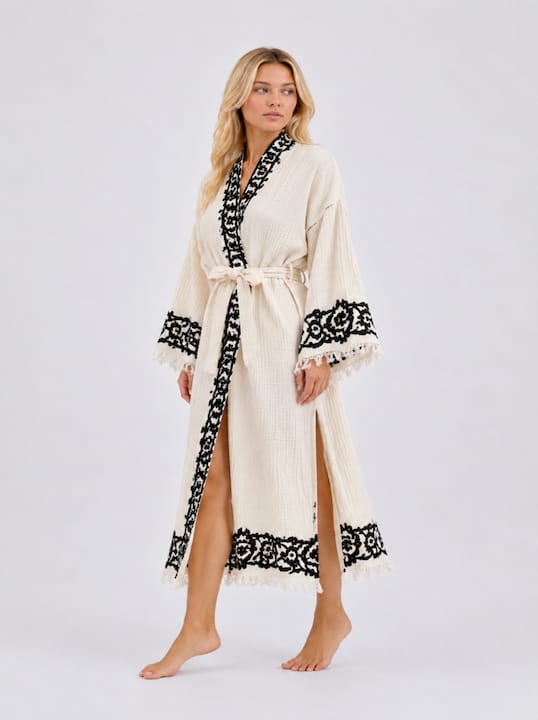
What are the best lightweight summer robes?
The best lightweight summer robes are made from linen, cotton-linen blends, or loosely woven muslin cotton, since these fabrics allow the most airflow. Indijio’s linen and cotton-linen kimonos are built specifically around this loose-weave, natural-fiber approach.
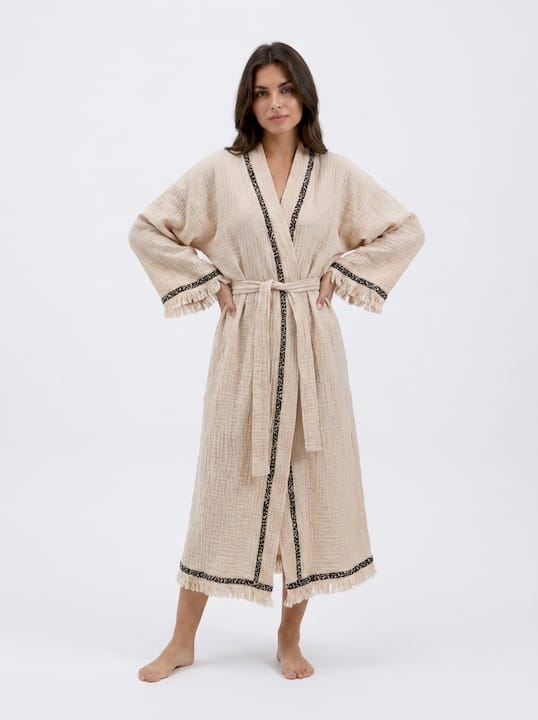
What is the best bathrobe for a hot tub?
Cotton terry is the best choice for hot tub or post-swim use because it absorbs water quickly and doesn’t leave lint on wet skin. Linen and lighter cotton weaves work better for everyday lounging rather than heavy water absorption.
What are some good light summer bathrobes?
Good light summer bathrobes use linen, cotton-linen blends, or waffle weave cotton in a short or mid-length cut with loose sleeves. Look for a fabric weight described as lightweight rather than plush, and check that the fiber content is fully natural rather than a synthetic blend.